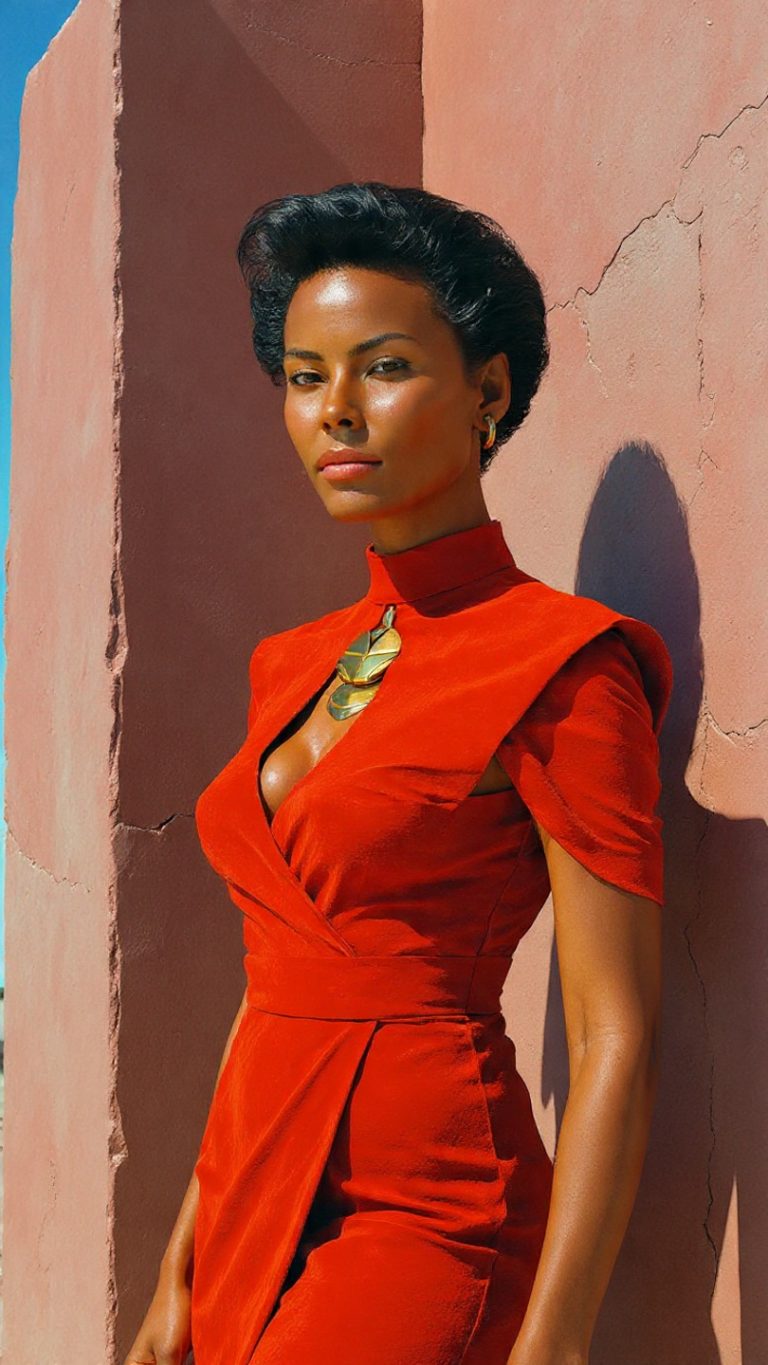
Before fashion learned to say inclusion, Ann Lowe was already dressing power.
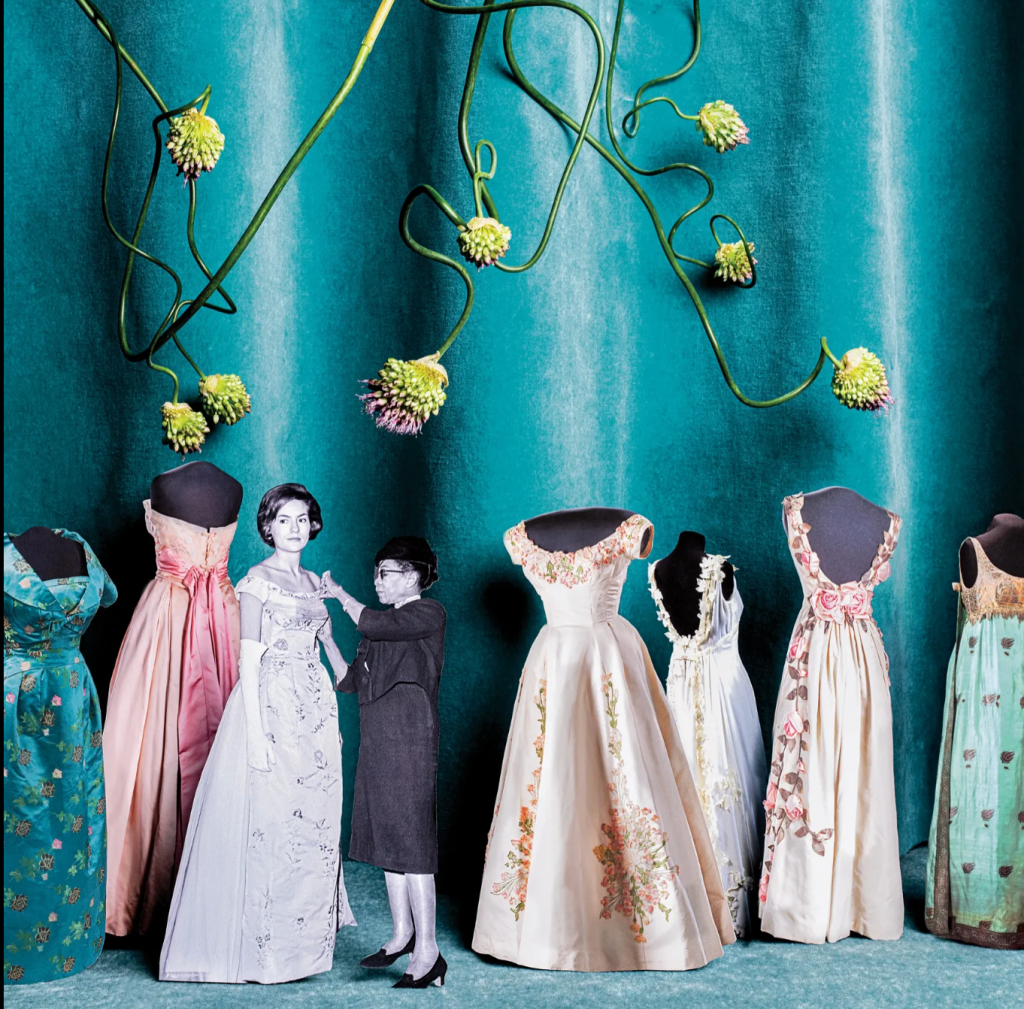
From Park Avenue ballrooms to presidential ceremonies, her gowns quietly moved through American history—hand-stitched, flowered, and sculpted—often admired without her name ever being spoken.
For decades, Ann Lowe clothed the women who defined American society: Rockefellers, Du Ponts, and Roosevelts. Yet her own legacy was deliberately pushed to the margins, reduced to whispers like “a colored dressmaker” in the press. Today, her work stands undeniably—no longer secret, no longer erased.
COUTURE BUILT BY HAND, NOT PERMISSION
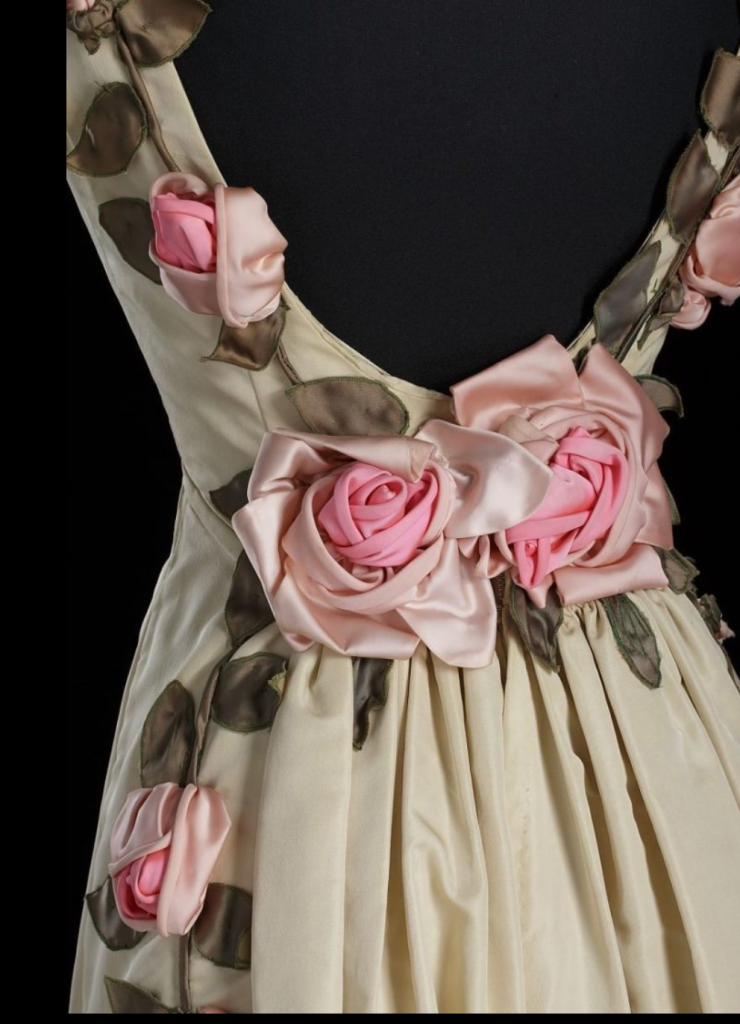
Lowe’s design language was unmistakable: romantic silhouettes, architectural volume, and signature three-dimensional
floralappliqués—each petal shaped, layered, and sewn by hand.
Her gowns felt almost unreal, as if lifted from a fairytale but anchored by technical mastery.
This wasn’t ornament for ornament’s sake. It was discipline. Craft. Control.
She learned it early—long before New York, long before acclaim.
FROM ALABAMA TO MANHATTAN
Born in Clayton, Alabama, in 1898, Ann Lowe was the granddaughter of a formerly enslaved woman. Dressmaking was not a hobby in her family—it was a matter of survival, tradition, and inheritance. She learned the trade from her mother and grandmother, mastering construction as a child.
In 1917, she moved to New York and enrolled at the S.T. Taylor School of Design. Segregated from her white classmates, she was nevertheless so advanced that she completed the program in half the required time.
Talent could not be contained—even when it was intentionally isolated.
THE GOWNS THAT MADE
HISTORY Jacqueline Bouvier’s Wedding Dress (1953)
Lowe’s most famous creation was the ivory silk taffeta gown worn by Jacqueline Kennedy at her wedding to John F. Kennedy. Just ten days before the ceremony, a flood destroyed the original dress and most of the bridesmaids’ gowns. Lowe and her team recreated everything from scratch—on time.
She absorbed the financial loss herself. The credit was muted. The dress became legendary.
— Enith Verona
Founder & Editor-in-Chief, ADORÉ
Designer Legacy Series.
Legacy doesn’t disappear when files are deleted.
It waits for the right house to rebuild it.
© Enith Verona. All rights reserved.