Adoré Issue Nº3 — Fabric Renaissance
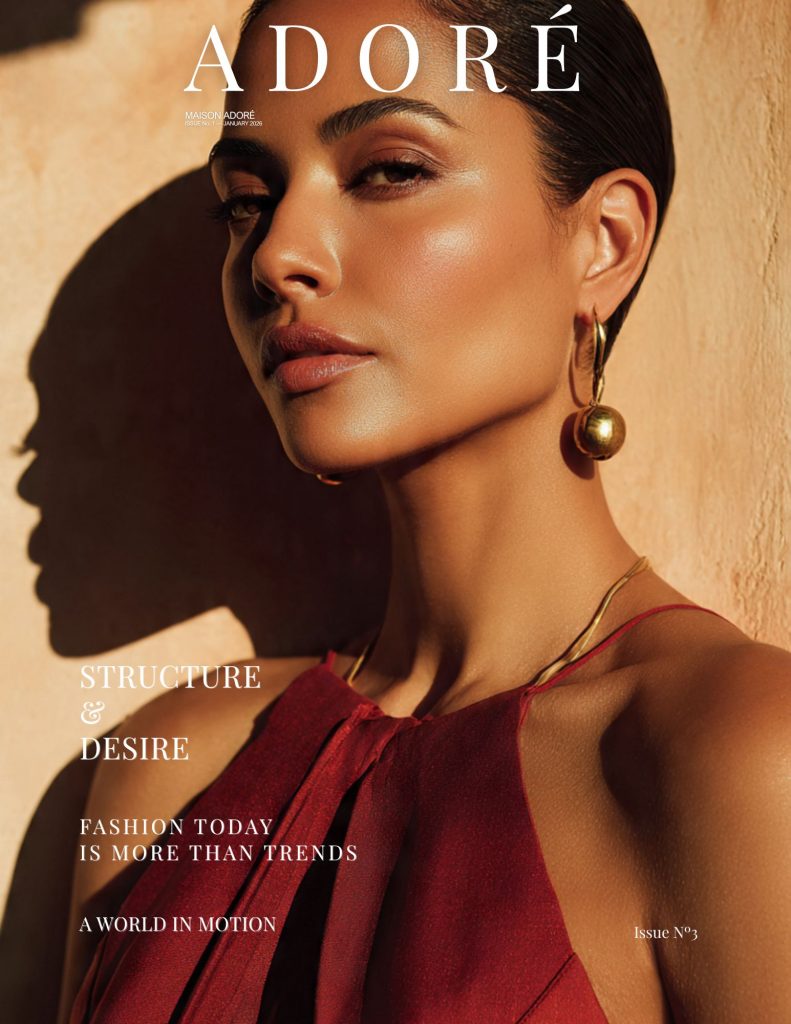
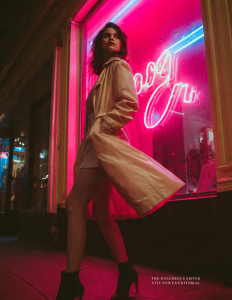
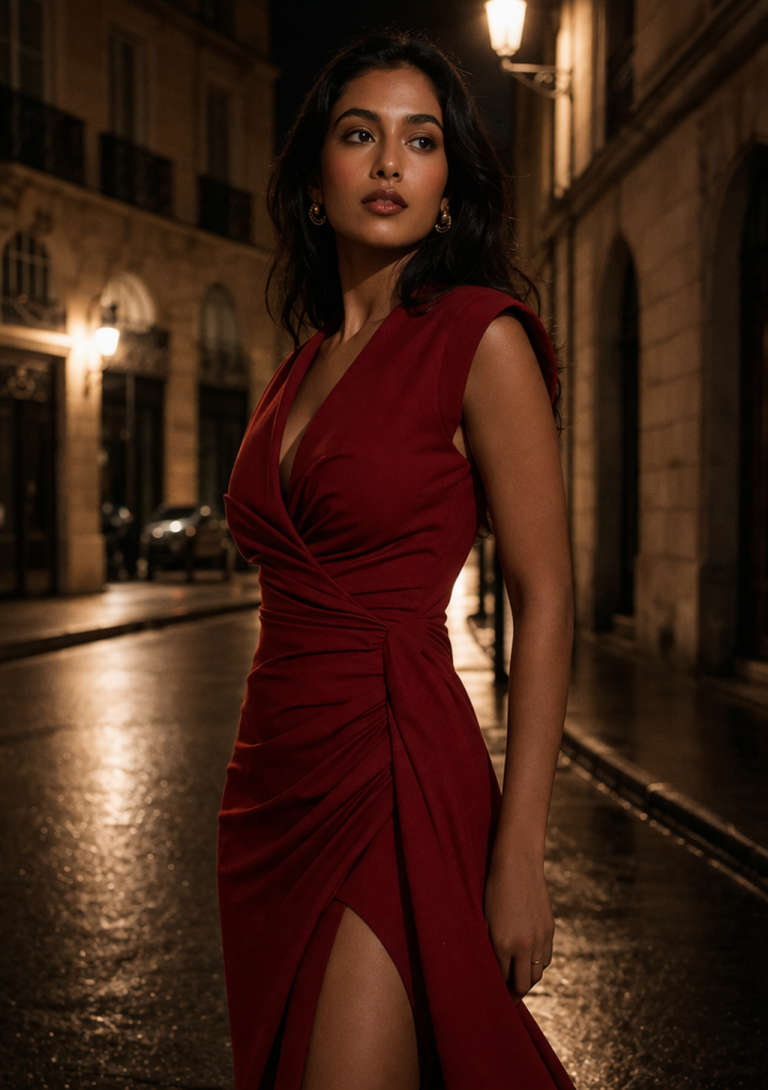
In the city that never sleeps, where steel meets silk and tension meets refinement, the modern Renaissance woman reigns supreme. Moving seamlessly between the vibrant streets of New York and the timeless elegance of Paris, she becomes a study in contrast, composed, deliberate, and entirely her own.
Through the lens of fashion, movement, and visual narrative, Issue Nº3 captures the essence of this urban presence. Structured silhouettes echo the sharp lines of Manhattan, while soft light and fluid textures recall the quiet precision of a Parisian atelier. The rhythm of the city shifts from urgency to control, where silk gloves, tailored forms, and red-lead compositions move in quiet command.
This issue is a reflection of the city dweller, where fashion extends beyond clothing into presence, attitude, and spatial awareness. The Renaissance woman does not adapt to the city; she defines her place within it.
In the city that never sleeps, where steel meets silk and tension meets refinement, the modern Renaissance woman reigns supreme. Moving seamlessly between the vibrant streets of New York and the timeless elegance of Paris, she becomes a study in contrast, composed, deliberate, and entirely her own.
Through the lens of fashion, movement, and visual narrative, Issue Nº3 captures the essence of this urban presence. Structured silhouettes echo the sharp lines of Manhattan, while soft light and fluid textures recall the quiet precision of a Parisian atelier. The rhythm of the city shifts from urgency to control, where silk gloves, tailored forms, and red-lead compositions move in quiet command.
This issue is a reflection of the city dweller, where fashion extends beyond clothing into presence, attitude, and spatial awareness. The Renaissance woman does not adapt to the city; she defines her place within it.
Also keeping a close eye on the action was Kate Barton, whose handbags were prominently displayed on the main floor. Watching shoppers circle, consider, and commit, she didn’t have to wait long before seeing one find a new home.
Chamberlain, who had also contributed pieces to the sale, wore a look based less on label and more on aesthetic. “I’m choosing things strictly for vibe—I don’t care about anything else,” she said of her cropped, double-breasted tweed Sandro jacket (cut just short enough to reveal elongated leather gloves), paired with easy Double RL denim and a charming no-label handbag with a mirror built directly into the lining.
Elsesser, meanwhile, was dressed in a Tom Ford–era Gucci knit with a built-in fur vest, a sculptural skirt by Junya Watanabe, and Chanel boots (“by Karl,” she clarified). “I’m a kooky hat person—if you don’t buy it, I will,” she warned a fellow shopper eyeing a glossy black Miu Miu cap adorned with three-dimensional florals evoking an Esther Williams scene. What Elsesser ultimately walked away with, though, was a pair of black Prada briefs and a gray tank from Martin Margiela’s late-1990s “flat” collection. “I collect this Margiela flat collection,” she said.
Beyond the racks, Astley’s corner extended the hunt into the home. There, Elsa Peretti bowls for Tiffany & Co. sat alongside Murano glassware in gleaming candy colors. At one point, Elsesser paused mid-shop, delighted by a silver-scaled fish that revealed itself to be a bottle opener. “I’m obsessed,” she said.
From the GQ edit, one standout—a patent black jacket from Raf Simons’s tenure at CALVIN KLEIN 205W39NYC—was snapped up almost instantly. But as racks began to thin, fresh pieces quietly appeared in their place, keeping the pace intact.
By early afternoon, it was clear: at the Vogue Vintage Market, the past doesn’t linger—it circulates. And with 100% of net proceeds benefiting the CFDA/Vogue Fashion Fund and the Center for Youth Mental Health at NewYork-Presbyterian, each piece carried not just history, but purpose.
With thanks to eBay, the official vintage and pre-loved partner of Vogue.